Garment Spec Sheet Generator
Pick a garment, enter your sample measurements and grade rules, and get a full measurement spec sheet with tolerances for every size. Download it as a CSV for Excel or Google Sheets, or save it as a PDF for your factory. No sign-up.
Updated November 2026
Make your spec sheet
Start from a garment template, then change any point of measure to match your design. Every number you change updates all sizes at once.
Edit the base, grade and tolerance for each point. The size columns update as you type. Starting values are examples for a size M sample, not a standard: replace them with measurements from your own fit sample.
| Point of measure | Base (M) | Grade | Tol +/- | XS | S | M | L | XL | 2XL | Remove |
|---|---|---|---|---|---|---|---|---|---|---|
| 27 | 28 | 29 | 30 | 31 | 32 | |||||
| 19 | 20 | 21 | 22 | 23 | 24 | |||||
| 19 | 20 | 21 | 22 | 23 | 24 | |||||
| 16.5 | 17.25 | 18 | 18.75 | 19.5 | 20.25 | |||||
| 7.5 | 8 | 8.5 | 9 | 9.5 | 10 | |||||
| 6.75 | 7 | 7.25 | 7.5 | 7.75 | 8 | |||||
| 8 | 8.5 | 9 | 9.5 | 10 | 10.5 | |||||
| 6.75 | 7 | 7.25 | 7.5 | 7.75 | 8 | |||||
| 3.5 | 3.625 | 3.75 | 3.875 | 4 | 4.125 | |||||
| 0.75 | 0.75 | 0.75 | 0.75 | 0.75 | 0.75 | |||||
| 0.75 | 0.75 | 0.75 | 0.75 | 0.75 | 0.75 | |||||
| 1 | 1 | 1 | 1 | 1 | 1 |
What is a garment spec sheet?
A garment spec sheet (also called a measurement spec sheet or size spec) is the table that tells a factory how big each part of a garment must be in every size. Each row is a point of measure (POM), such as chest width or sleeve length. Each row has a target value, a tolerance, and a grade that says how much it changes from one size to the next.
A tech pack is the full instruction pack for a style: flat sketches, materials (BOM), construction, labels, packaging and the spec sheet. So the spec sheet is one part of a tech pack, usually the part the factory checks most often. Some small brands send a spec sheet with a reference garment instead of a full tech pack, but most factories will ask for both.
Points of measure: what to measure
Measure the garment flat on a table, smoothed but not stretched. Write down whether each value is a half measurement (one layer, side to side) or a full one. Mixing the two is the most common reason samples come back the wrong size.
| Garment | Key points of measure |
|---|---|
| T-shirt | Body length from HPS, chest width, bottom width, shoulder, sleeve length, sleeve opening, armhole, neck width, front and back neck drop, rib and hem height |
| Hoodie | Body length, chest, waistband width, shoulder, sleeve length, cuff width and height, armhole, hood height and width, pocket width |
| Jeans and trousers | Waist, low hip, front and back rise, thigh, knee, leg opening, inseam, waistband height |
| Dress | Body length, bust, waist, hip, hem sweep, shoulder, armhole, neck width and drop |
| Shorts | Waist, hip, front and back rise, thigh, leg opening, inseam |
| Jacket | Body length, chest, hem width, shoulder, sleeve length, cuff opening, armhole, collar height |
HPS means high point shoulder: the point where the shoulder seam meets the neckline. Most body lengths start there.
Tolerances: how much difference is allowed
Tolerance is the plus or minus a finished garment may differ from the spec and still pass. Points that decide fit (chest, waist, hip, shoulder) get tighter tolerances than points that do not, such as hem height.
A useful rule: keep each tolerance at or below half of that point’s grade. If chest grades 1 inch per size and the tolerance is wider than half an inch, a large could measure the same as a medium. Typical ranges are about 1/4 to 1/2 inch (6 to 13 mm) on body points and 1/8 inch (3 mm) on small details, but agree the numbers with your factory or buyer.
Grading: how sizes change
Grading scales your base sample (often size M or a size 8) up and down the size run. Each point of measure has its own grade. Girth points such as chest and waist usually grow more per size than length points, and some points, such as inseam or rib height, often stay the same in every size.
You, not the factory, should set the grade rules, because they decide how your brand fits. The tool applies one grade per point (a straight grade). If your bigger sizes jump more, add a second row for that range or edit the size column by hand in the CSV.
Free spec sheet example: men’s t-shirt
This is the default the tool opens with: a regular-fit tee, size M base, inches, half measurements.
| Point of measure | Tol +/- | S | M (base) | L | XL |
|---|---|---|---|---|---|
| Body length from HPS | 1/2 | 28 | 29 | 30 | 31 |
| Chest width (half) | 1/2 | 20 | 21 | 22 | 23 |
| Shoulder width | 3/8 | 17 1/4 | 18 | 18 3/4 | 19 1/2 |
| Sleeve length | 3/8 | 8 | 8 1/2 | 9 | 9 1/2 |
| Neck width | 1/4 | 7 | 7 1/4 | 7 1/2 | 7 3/4 |
These are example numbers for learning the format, not a size standard. Fit your own sample, then put its measurements in the base column.
How to check a sample against your spec sheet
- Ask the factory for a fit sample in your base size first, then a size set (one piece in every size) before bulk.
- Measure every point of measure on each piece, flat, the same way the spec says.
- Write the actual value next to the spec value. Anything outside the tolerance fails.
- Send the factory a short fit comment list: point, problem, fix, and whether it must change before bulk.
- Update the spec sheet version and date every time a number changes, so everyone works from the same sheet.
Common spec sheet mistakes
- Not saying if a measurement is half or full.
- Tolerances wider than half the grade, so sizes overlap.
- No "how to measure" note, so the factory measures a different spot.
- Grading every point the same amount, which makes big sizes too long and small sizes too short.
- Mixing inches and centimeters on one sheet.
- Changing a number by email without updating the sheet.
What you measure on a garment for a spec sheet
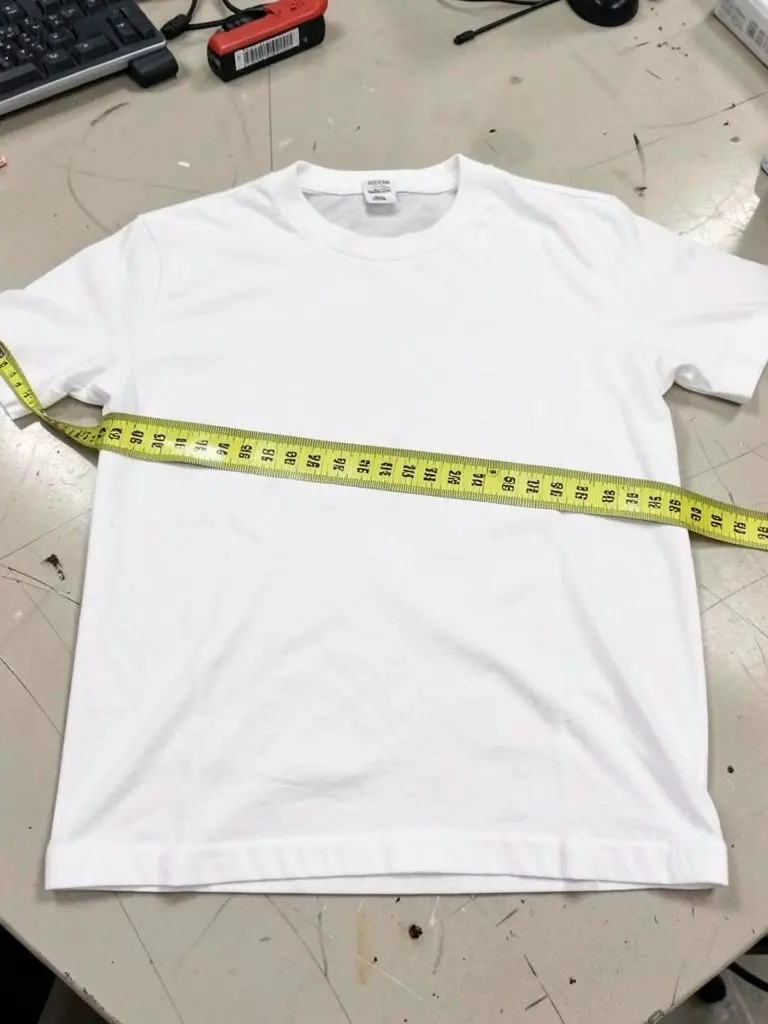
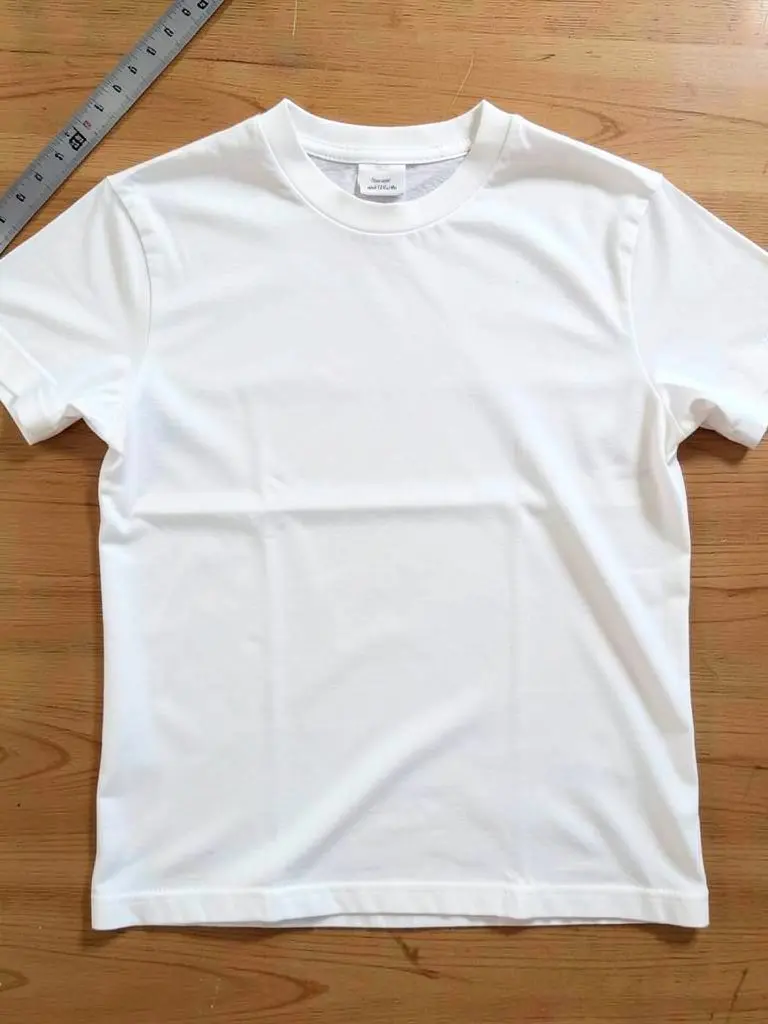
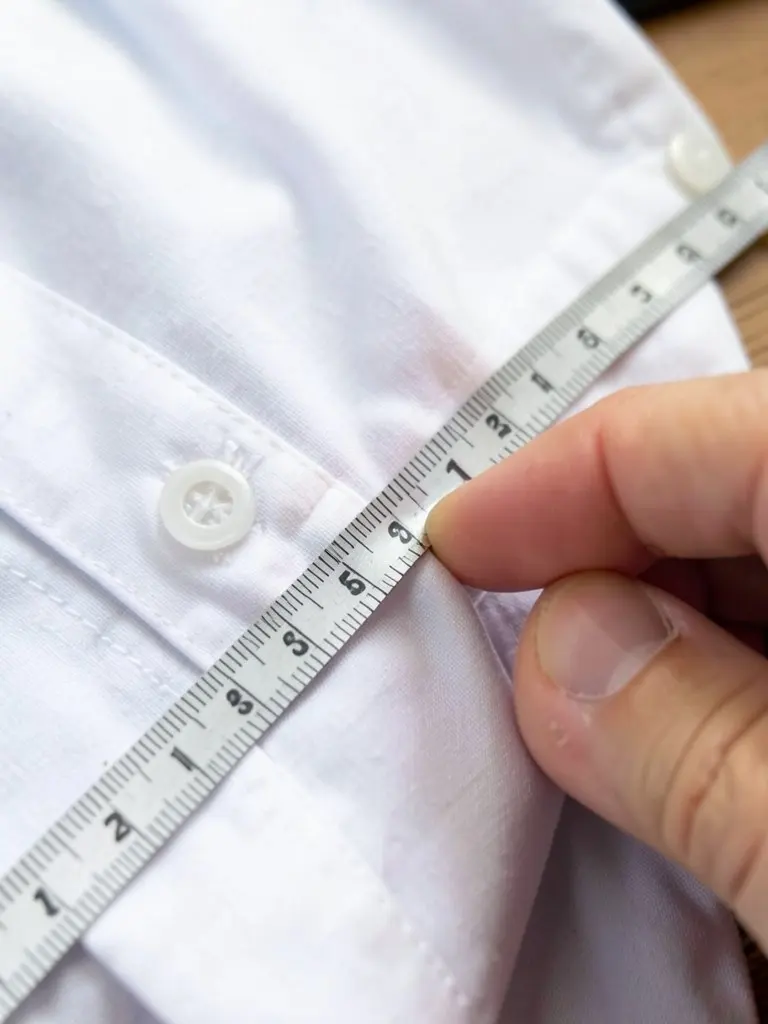
A spec sheet is built from measurements taken on a flat garment. These AI-generated photos show the tape across the chest, the sleeve laid flat with a ruler, and a close measure at the collar and seam.
Lay the garment flat, smooth it without stretching, and measure the same points every time.
FAQ
What is the difference between a garment spec sheet and a tech pack?
A spec sheet is the measurement table: points of measure, tolerances and graded sizes. A tech pack is the full set of instructions for a style, and the spec sheet is one section of it next to the sketches, materials, construction and labels.
How do I decide which points of measure to include?
Include every point that changes fit or look: lengths, widths at chest, waist and hip, shoulder, sleeves, openings and necklines, plus details like rib, hem and pocket sizes. Start from the template for your garment and add points for any special detail, such as a yoke or a pocket position.
How do grading rules work for different sizes?
Each point gets a grade: how much it changes between neighbouring sizes. The base size keeps the sample value, and each size above adds the grade while each size below subtracts it. Girth points usually grade more than lengths.
What tolerance should I use for a t-shirt?
A common starting point is plus or minus 1/2 inch on body length and chest, 3/8 inch on shoulder and sleeve, and 1/8 to 1/4 inch on neck and small details. Keep each tolerance at or below half its grade, and confirm with your factory.
Can I send only a spec sheet to a factory?
Some factories will quote and sample from a spec sheet plus a reference garment, but most want a full tech pack so they know the fabric, trims and construction too. Use the tech pack generator for the rest of the pack.
Is the spec sheet saved anywhere?
No. Everything runs in your browser and nothing is uploaded. Download the CSV or save the PDF before you close the page.
How do I measure a garment for a spec sheet?
Lay it flat, smooth it without stretching and measure each point the same way, such as chest across, body length and sleeve length. Write the numbers on the spec sheet and re-check them on the sample. The photos on this page are AI-generated examples.
More free tools for clothing sellers
Sources
- Techpacker: what is a garment spec sheet
- Delogue: how to spec a garment with points of measure
- Size.ly: size grading for apparel brands
- Fashion-Incubator: how to develop sewing tolerances
Starting measurements, grades and tolerances are examples. Fit, grade rules and tolerances differ by brand, garment and factory.
Start and run a clothing brand
Plan the line, name the brand, write the tech pack and line sheet, and price each piece.
- What Is a Clothing Line
- Start a Clothing Business from Home
- How to Start a T-Shirt Business
- How to Start a Print on Demand Business
- Turn a Design into a Product
- Clothing Business Ideas
- Clothing Business Plan Generator
- Clothing Brand Name Generator
- Clothing Brand Slogan Generator
- Clothing Brand Description Generator
- Tech Pack Generator
- Line Sheet Generator
- Clothing Costing Sheet Calculator
- Custom T-Shirt Pricing Calculator