What Is a Clothing Line?
A clothing line is a group of garments designed and sold together under one name. It can be as small as a few t-shirts or as large as a full range with tops, bottoms and outerwear. This guide explains what the term means, how a line differs from a brand and a collection, what a line looks like in practice, and the steps to launch your own.
Updated November 2026
Clothing line meaning
A clothing line is a set of related garments that a designer, brand or store sells under one label. The pieces share a theme: a fabric, a colour palette, a fit, a customer, or a season. Customers see the line as one offer, such as “the summer linen range” or “the kids’ basics line”.
The word is used loosely. Some people mean a whole small business (“I am starting a clothing line”), others mean one range inside a bigger business (“the brand’s new activewear line”). Both uses are common, and context tells you which one is meant.
Clothing line vs brand vs collection vs label
| Term | What it means | Example |
|---|---|---|
| Clothing line | A group of related garments sold together under one name | A six-piece range of heavyweight hoodies |
| Brand | The name, identity, story and promise behind all your products | The name, logo, voice and values customers recognise |
| Collection | A set of designs released for one season or one drop | Spring/Summer 2027, or a limited holiday drop |
| Label | The name sewn or printed into the garment, and sometimes the company itself | The woven neck label inside a tee |
A brand can have several lines. A line can have several collections over the years. If you are only starting out, you usually launch one brand with one small line.
What a clothing line includes
- A name that customers can say and remember, and that you can use as a web address and social handle.
- A set of products, often between 3 and 10 styles for a first release, in a few sizes and colours.
- A consistent look: the same logo placement, fit, photography style and price level across the pieces.
- Tags, labels and packaging that carry your name.
- A way to sell: your own online shop, a marketplace, wholesale to stores, or pop-up sales.
Types of clothing lines
- Print-on-demand lines: designs are printed only when an order arrives, so you hold no stock. Good for testing ideas.
- Cut-and-sew lines: you design the pattern and a factory makes the garments from fabric. More control and more cost.
- Private-label lines: you pick ready-made garments from a manufacturer and add your own label and small changes.
- Custom-blank lines: you buy blank garments and decorate them yourself or through a printer.
- Capsule lines: a small range of pieces that mix and match, released once and sold until they sell out.
- Seasonal lines: new ranges every spring/summer and autumn/winter, as larger fashion labels do.
How to start a clothing line
- Decide who it is for. A line that tries to suit everyone is hard to design and hard to market. Pick one customer and one need.
- Choose a production route. Print-on-demand is the lowest risk, cut-and-sew the highest control. Your budget decides.
- Design a small first range. Start with a few pieces you can photograph well, and test sizes and prints before scaling.
- Work out your costs and prices. Include the garment, print or sewing, packaging, shipping, fees and returns, then check your margin with the costing sheet calculator or the T-shirt pricing calculator.
- Pick a name and brand look. Use the clothing brand name generator for ideas and check that the name is free to use before you print it.
- Make product photos. Mockups work before samples exist, and model photos help once you have the garment.
- Choose where to sell and launch to a small group first. Learn from the first orders, then add styles.
What it costs
The cost depends entirely on the route. A print-on-demand line can start with almost no stock cost, because each item is made after it is sold. A cut-and-sew line needs money for patterns, samples and minimum order quantities up front, and factories set their own minimums.
Whatever route you take, add up the whole cost per piece, not only the garment. Packaging, shipping, payment fees, returns and the cost of your photos all take a share of the price. The honest way to price is to start from the cost and the margin you want, then check that customers will pay it.
Common mistakes
- Launching too many styles at once. Fewer pieces make better photos, simpler stock and clearer marketing.
- Pricing from what feels right instead of from cost.
- Skipping samples. A print or fit that looks fine on screen can look wrong on the garment.
- Copying another brand’s design or name. Original work protects you and helps you stand out.
- Ignoring the photos. Online, the photo is the product, so invest in clean, consistent images.
What a small clothing line looks like
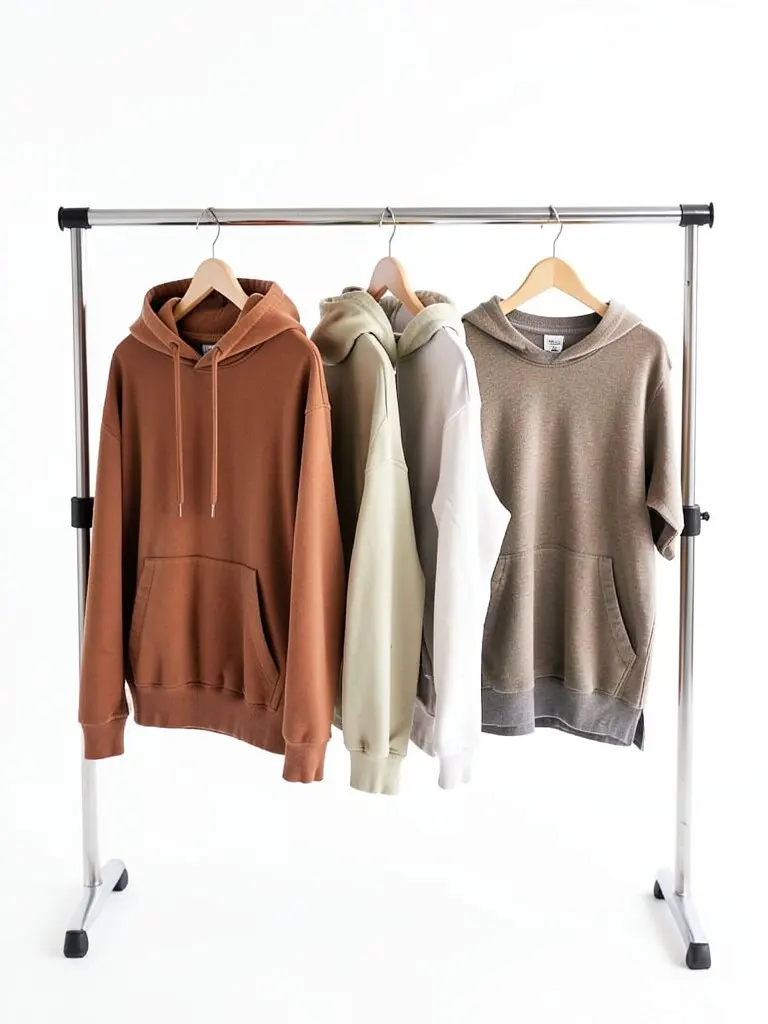
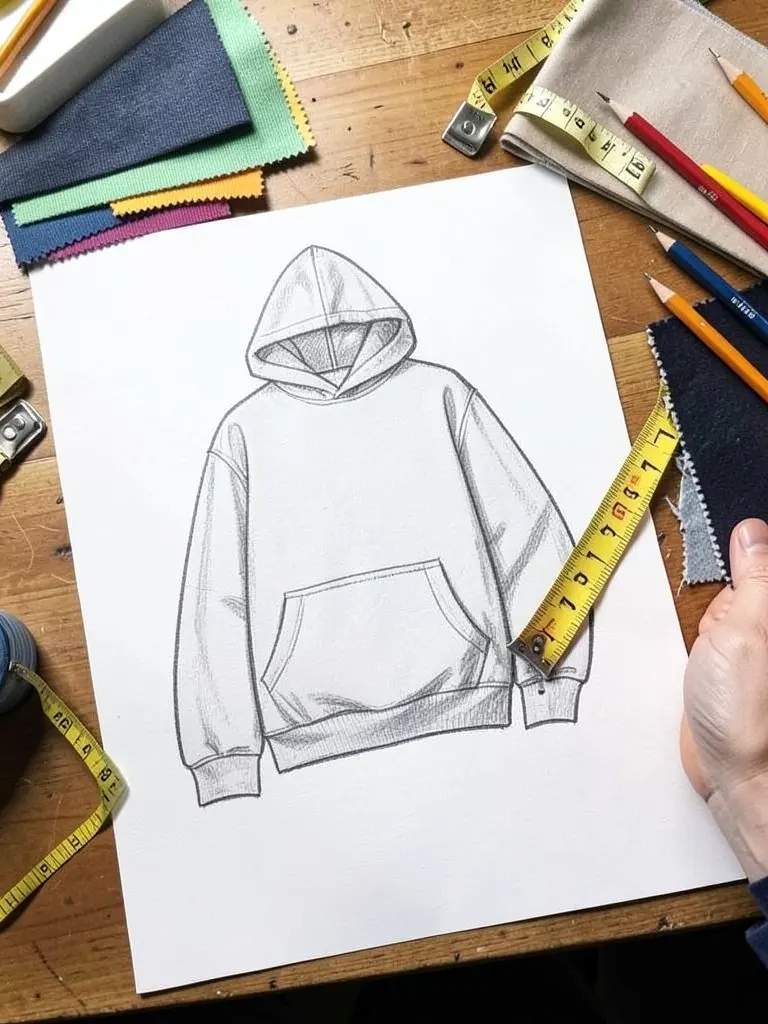
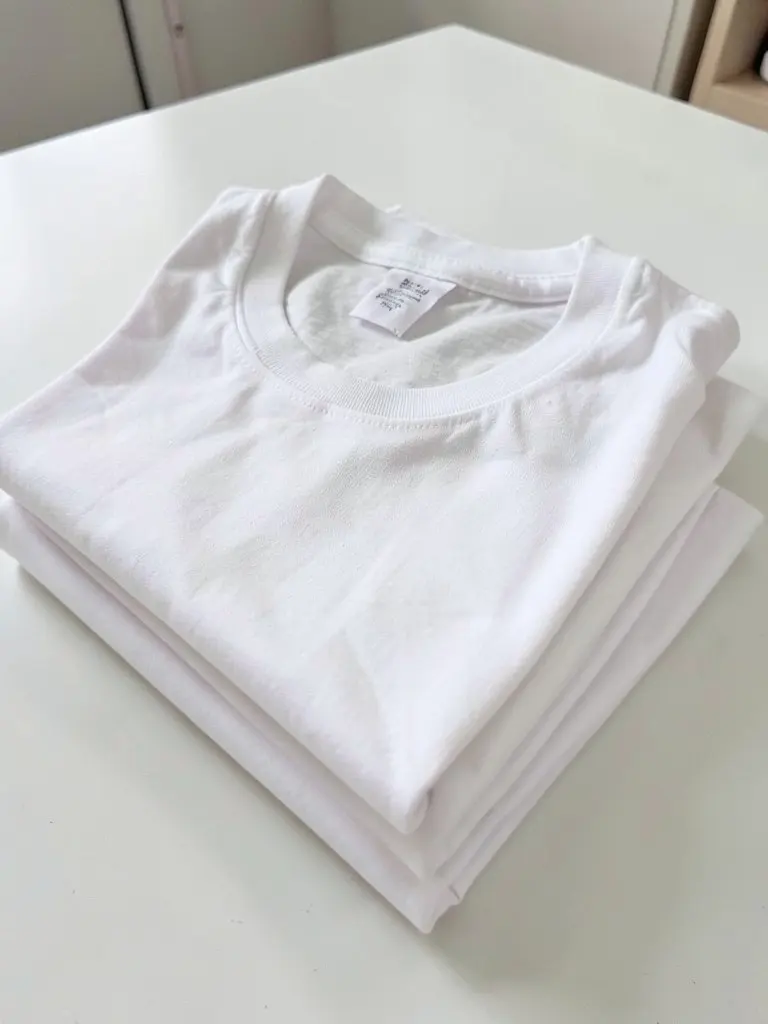
A clothing line starts as a sketch and a few fabric swatches, becomes a small run of blank pieces and ends as a rail of finished products. Most small lines begin with one or two items rather than a full range.
These example photos are AI-generated with our own model. They show a design sketch, blank cotton tees and a small collection on a rail.
FAQ
What is a clothing line in simple words?
A group of garments made and sold together under one name, usually with a shared style, fabric, customer or season.
Is a clothing line the same as a clothing brand?
Not quite. A brand is the identity and reputation behind everything you sell. A line is a specific range of products. One brand can sell many lines, though a new business often has one brand and one line.
What is the difference between a clothing line and a collection?
A collection is a set of designs released for one season or drop. A line is a broader range that can continue across seasons and include several collections.
How many pieces should a first clothing line have?
Many new brands start with three to ten styles. A small range is easier to design, photograph, price and sell, and you can add pieces once you see what customers order.
Can I start a clothing line without a factory?
Yes. Print-on-demand and custom-blank routes let you sell designs without owning stock or a factory. You choose the garment and the design, and a printer makes each order.
Do I need a business to sell a clothing line?
Rules differ by country. Check with your local government or tax office before you sell. This page is general information, not legal or tax advice.
How many pieces should a first clothing line have?
Most small brands start with one to three pieces, so they can afford quality samples and good photos for each. Add more once the first ones sell.
More free tools for clothing sellers
Start and run a clothing brand
Plan the line, name the brand, write the tech pack and line sheet, and price each piece.
- Start a Clothing Business from Home
- How to Start a T-Shirt Business
- How to Start a Print on Demand Business
- Turn a Design into a Product
- Clothing Business Ideas
- Clothing Business Plan Generator
- Clothing Brand Name Generator
- Clothing Brand Slogan Generator
- Clothing Brand Description Generator
- Tech Pack Generator
- Garment Spec Sheet Generator
- Line Sheet Generator
- Clothing Costing Sheet Calculator
- Custom T-Shirt Pricing Calculator