Vinted Reselling Guide (UK)
Plenty of people want to buy clothes cheaply and resell them on Vinted. Before you do, you need to know Vinted’s rules: reselling for profit is treated differently from clearing your own wardrobe. This guide explains what Vinted allows, what it costs, how you get paid, how to price and list clothes, and where tax comes in. Platform facts come from the Vinted UK help centre and tax facts from gov.uk, both checked on 2 November 2026.
Updated November 2026
The most important rule: reselling needs a Pro account
Vinted’s help centre says standard accounts cannot be used to sell professionally, and that this includes buying or sourcing items and reselling them at a profit. If you have a legal status as a business, act on behalf of one, or sell on Vinted to make a profit, Vinted says you need to sign up as a Pro seller.
So the honest answer to “can I resell on Vinted?” is: yes, as a Pro seller. A standard account is for selling your own things. If you resell for profit on a standard account, Vinted may restrict it, and after a warning it may be banned permanently (Vinted help centre, checked 2 Nov 2026).
What you cannot sell, even as a Pro seller
- New items bought specifically to resell. This covers stock from wholesalers, bulk orders and items bought from shops to resell for profit, and it applies to Pro sellers too.
- Items you made yourself, and custom or made-to-order items.
- Cosmetics, beauty products and beauty devices.
- A large number of brand-new items, including items with tags.
- Low-value items sold through dropshipping, and items bought in bulk for resale.
- Services, rentals, or listings for items you do not currently own.
In practice, Vinted reselling means pre-owned clothing. That is the opposite of a new-stock clothing brand, so if you make or buy new garments to sell, use your own online shop or another marketplace instead.
What Vinted costs
Vinted says there are no fees for uploading or selling items, and you can list as many as you like. Buyers pay a Vinted fee at checkout, which Vinted says is typically 3% to 8% plus £0.30 to £0.80. Buyers also pay shipping, and Vinted says shipping rates depend on the parcel size and on the buyer’s and seller’s locations.
Pro sellers have extra rules, such as showing clear policies for buyers and not taking payments outside Vinted. Check the Vinted Pro guide before you sign up. Because the buyer pays the fee, a seller’s cost is mostly the item, the packaging and the time. Use our Vinted fee calculator to see what a sale leaves you.
How you get paid
You must send the item within 5 business days of the sale, or the order is cancelled and the buyer is refunded. An order is completed when the buyer confirms “Everything is OK”, or 2 days after delivery if they say nothing. After that, Vinted says you receive payment within 2 days, moving from pending to available balance.
Pro seller orders are different. They complete automatically 14 days after the buyer receives them, unless the buyer returns the item in that time, because of the buyer’s right of withdrawal. You can spend the balance on Vinted or withdraw it to your bank, which Vinted says can take up to 5 business days.
Finding stock to resell
Reselling pre-owned clothing means sourcing it: charity shops, car boot sales, house clearances, and your own wardrobe. A good source is one where you can check the condition, the label and the measurements before you buy.
Gov.uk uses buying from car boot sales and charity shops to resell online at a higher price as an example of trading, which may mean you have to tell HMRC about the income. Keep your purchase receipts and sales records from the start.
Pricing clothes for Vinted
- Search the same brand and item sold recently, and compare condition and size.
- Know your cost: what you paid, plus cleaning, repairs and packaging.
- Leave a little room for offers and bundle discounts.
- Aim for a clear profit per item, not only a sale. Cheap items with high shipping and effort rarely pay.
- Put the real condition in the listing. Honest notes reduce returns.
Listing and selling faster
Vinted’s own advice for selling faster is to offer discounts on multiple items, use Bump or Showcase, send offers to people who favourite your items, upload regularly, and use good photos and detailed descriptions. It also recommends verifying your profile and writing an About me message to build trust.
Photos matter for clothing. Show the front, back, label and any flaws in daylight on a plain background, and add the measurements. Vinted does not allow pictures taken from the internet or other members, or stock pictures, so always photograph the actual item. Our Vinted description generator can help with the text, and the flat lay to model tool can turn a flat photo into a model view.
Tax and records
Vinted says selling your own personal items is generally not taxed, and that platforms report some sellers to HMRC. Reselling items you bought to make a profit is different: gov.uk treats buying to resell at a profit as a sign that you are trading, and the £1,000 trading allowance applies to trading income in a tax year. A platform report does not automatically mean you owe tax.
This page is general information and not tax advice. Read the official gov.uk guidance, keep records of what you paid and what you sold for, and ask HMRC or an accountant if you are unsure.
Preparing stock to photograph for Vinted
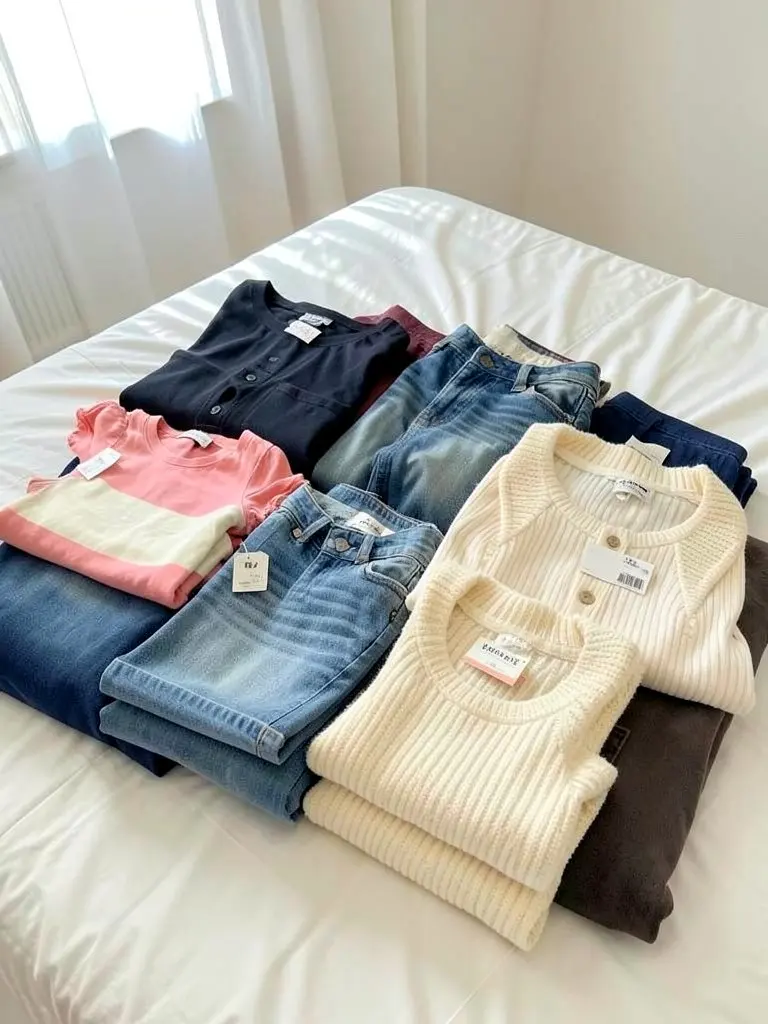
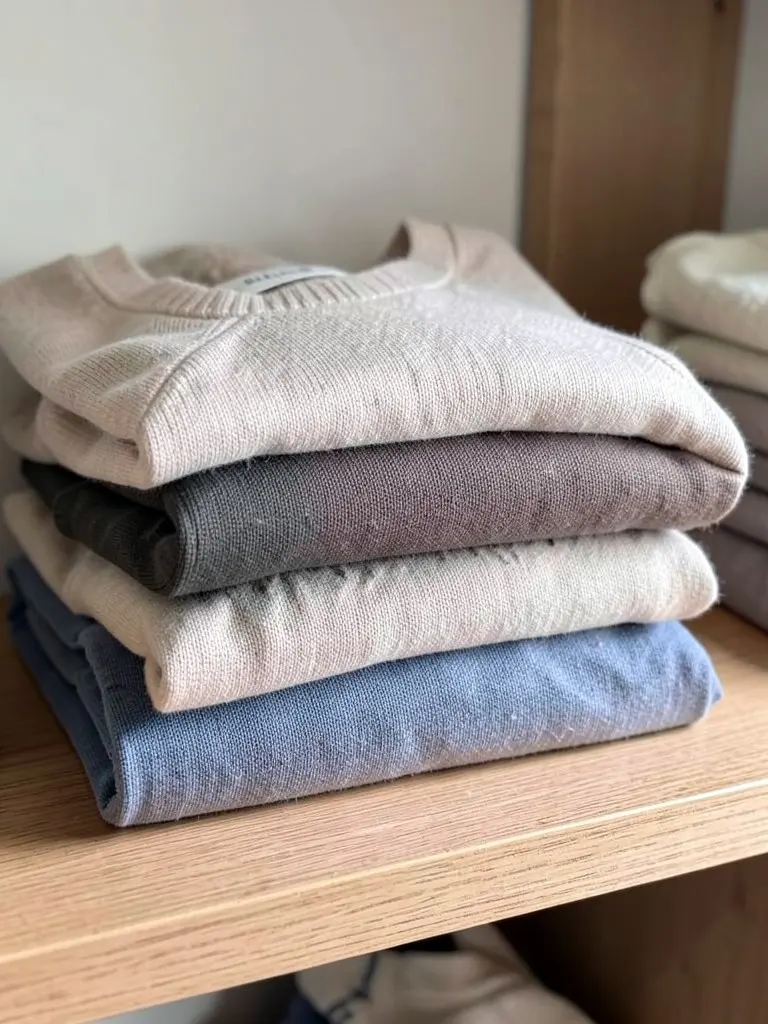
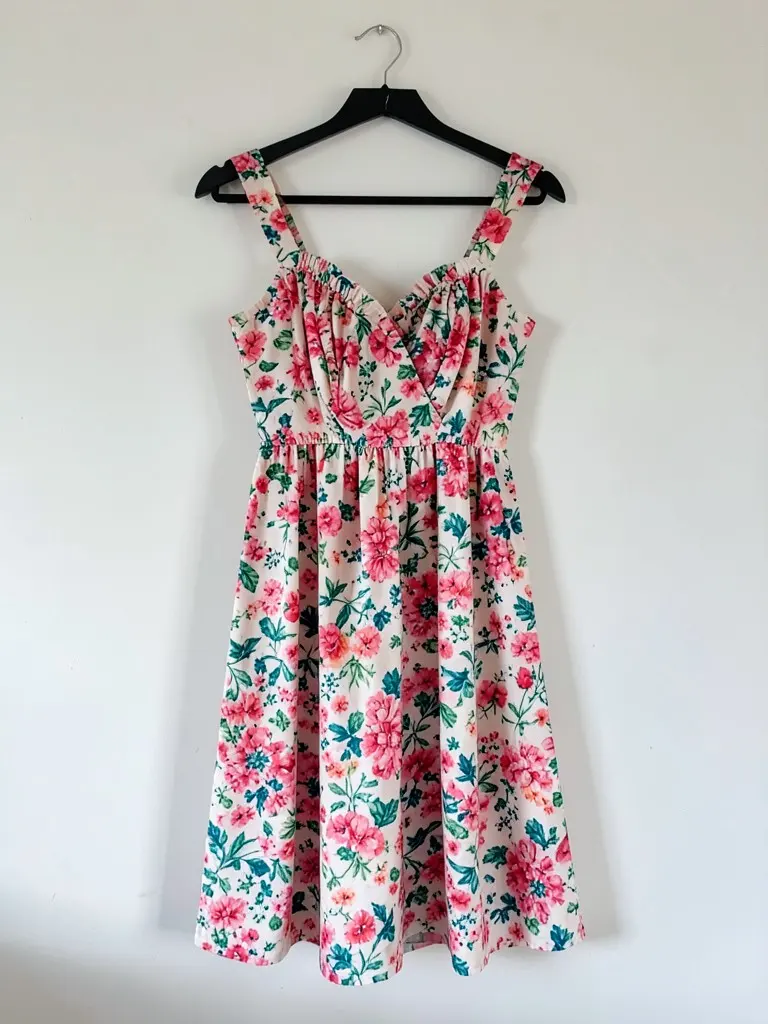
Sort what you have bought into batches before you photograph anything: tops, bottoms, knitwear. Check every piece for flaws, fold or hang it neatly and shoot it in the same spot so your shop looks consistent.
These example photos are AI-generated with our own model. They show sorted piles, a neat stack of knitwear and a dress on a hanger.
FAQ
Can I buy clothes to resell on Vinted?
Vinted says standard accounts cannot be used to buy items and resell them at a profit. If you sell to make a profit, you need a Pro seller account. Even Pro sellers cannot sell new items bought to resell.
Is Vinted free to sell on?
Vinted says there are no fees for uploading or selling items. The buyer pays a Vinted fee at checkout, which is typically 3% to 8% plus £0.30 to £0.80.
How long does Vinted take to pay sellers?
Vinted says payment arrives within 2 days of the order being completed. A standard order completes when the buyer confirms, or 2 days after delivery. Pro orders complete 14 days after delivery.
How soon must I send an item?
Within 5 business days of the sale, unless the buyer agrees to a longer time. Otherwise the order is cancelled and the buyer is refunded.
Do I pay tax on Vinted sales?
Selling your own personal items is generally not taxed, according to Vinted. Buying to resell at a profit can count as trading. This is not tax advice, so check gov.uk or ask HMRC.
Can I sell my own clothing brand on Vinted?
No for Pro sellers: Vinted does not allow items you made yourself or made-to-order items, or large numbers of new items. Sell your own designs in your own shop or on a marketplace that allows it.
What makes a good Vinted listing photo?
Natural daylight, a plain background, the whole item in frame and a close-up of any flaw. Keep the same background across your listings so buyers recognise your shop.
More free tools for clothing sellers
Sources
- Vinted UK help centre: commercial selling
- Vinted UK help centre: what you can sell as a Pro seller
- Vinted UK help centre: selling basics
- Vinted UK help centre: getting paid for a completed sale
- Vinted UK help centre: the Vinted fee
- Vinted UK help centre: selling your items faster
- GOV.UK: check if you need to tell HMRC about your income from online platforms
Platform facts checked 2 November 2026. Vinted can change its rules. This page is not tax advice.
Sell clothes online: listings and fees
Write listings for Depop, Vinted, Poshmark, eBay and Mercari, and work out the fees before you price.
Clothing Description Generator
- Depop Description Generator
- Vinted Description Generator
- Poshmark Description Generator
- eBay Clothing Description Generator
- Mercari Description Generator
- Clothing Caption Generator
- Reseller Fee Comparison Calculator
- Depop Fee Calculator
- Depop Shipping Calculator
- Vinted Fee Calculator
- Poshmark Fee Calculator
- Mercari Fee Calculator
- Etsy Fee Calculator
- TikTok Shop Fee Calculator
- eBay Fee Calculator
- Whatnot Fee Calculator
- Grailed Fee Calculator
- How Does Depop Work
- HMRC and Vinted Sales